
Leave a Message
We will call you back soon!
Your message must be between 20-3,000 characters!
Please check your E-mail!
More information facilitates better communication.
Submitted successfully!
We will call you back soon!
Leave a Message
We will call you back soon!
Your message must be between 20-3,000 characters!
Please check your E-mail!
| Minimum Order Quantity: | 10000pcs |
|---|---|
| Price: | USD |
| Supply Ability: | 4000-5000pcs/day |
| Process: | Stamping | Size: | Customized Size,as Customer Require |
|---|---|---|---|
| Item: | Sheet Metal Stamping Parts Machined Parts | Color: | Silver-white |
| Highlight: | Battery Connector Metal Stamping,Battery Connector Terminal Part,Metal Stamping Battery Contact |
||
This rechargeable battery connection sheet substrate uses phosphorus-tin bronze (phosphor bronze) as the base material. The finished product surface adopts electroplating nickel surface treatment technology, which is a commonly used conductive connection component for lithium batteries and energy storage batteries.
I. Base Material: Phosphorus-tin Bronze
Phosphorus-tin bronze is an alloy material mainly composed of copper and tin, with a small amount of phosphorus added:
1. Excellent electrical conductivity, low resistivity, stable current conduction;
2. Good elasticity, resistant to fatigue, not prone to deformation and loosening under repeated insertion, vibration, etc.;
3. Wear-resistant, corrosion-resistant, strong toughness, good stamping processing formability, can precisely punch out special structures and positioning holes, with smooth cuts and few burrs;
4. Compared with ordinary brass, it is less prone to cracking, the elastic attenuation is slow over a long period of use, suitable for battery tab/connector scenarios requiring stable contact and conductivity.
II. Surface Treatment: Electroplating Nickel (Nickel Plating)
A thick nickel plating is carried out on the surface of phosphorus-tin bronze substrate:
1. The plating layer is uniform and dense, isolating the substrate from air and water vapor, preventing oxidation, rusting, and sulfide corrosion, avoiding copper oxidation and blackening that leads to increased contact resistance;
2. The nickel layer itself has good welding performance, facilitating laser welding, ultrasonic welding, and secure welding with battery tabs and bus bars;
3. The plating layer has higher hardness, enhancing surface wear resistance, and is less likely to be scratched during assembly;
4. The plating layer is controllable in consistency, with stable thickness, and will not have uneven thickness affecting conductivity in some areas.
III. Product Process Flow
Raw material phosphorus-tin bronze strip → Precision high-speed stamping forming (forming special shapes and positioning holes in one step) → Pre-treatment for degreasing and activation → Electroplating nickel → Cleaning and drying → Appearance, size, and plating layer inspection → Finished product
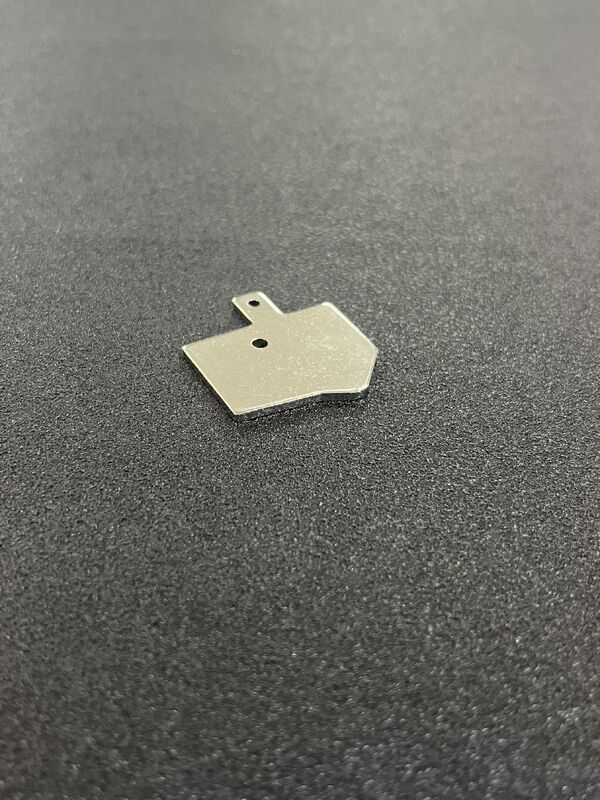
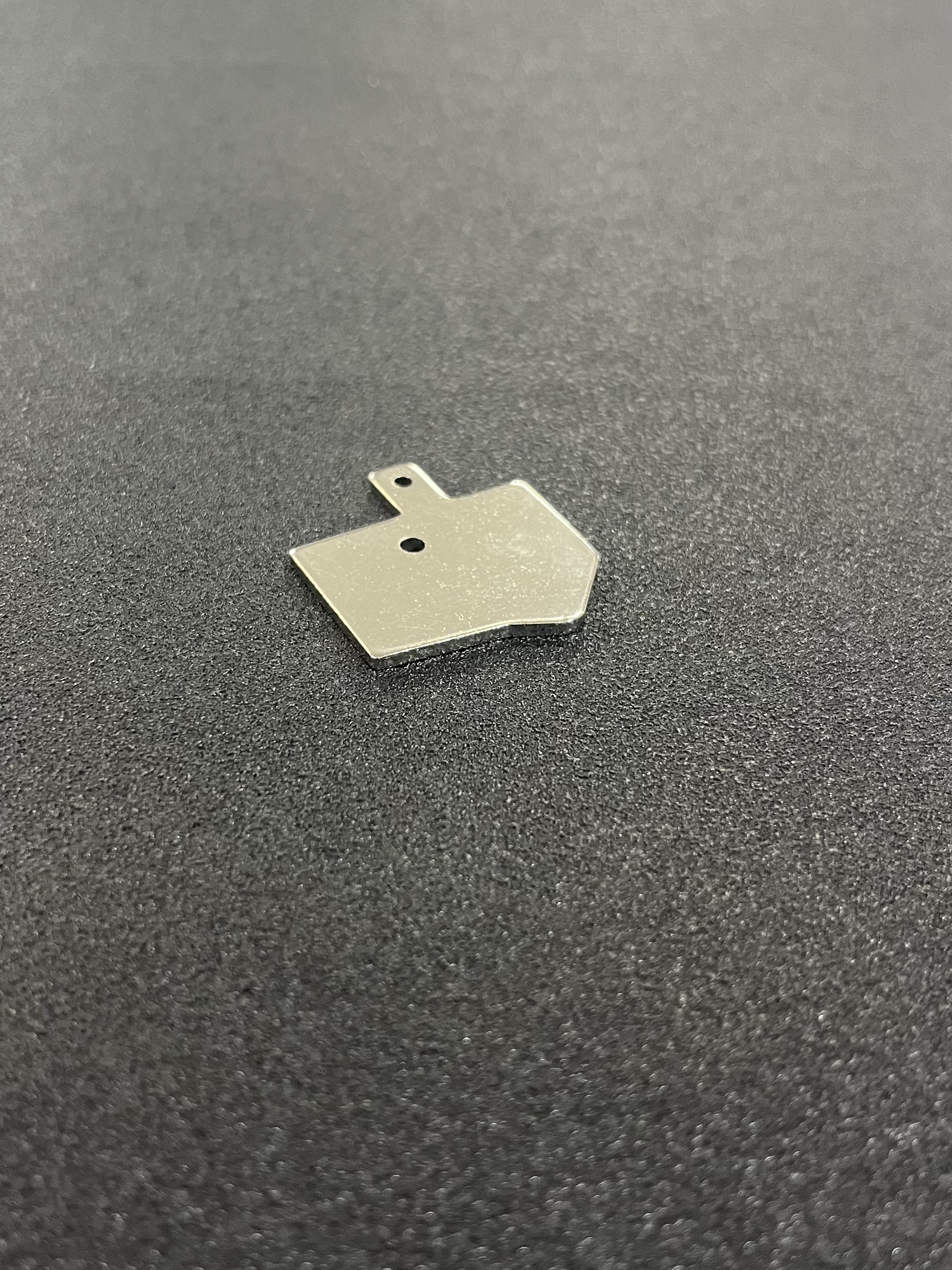
The stamping can be customized with special shapes according to the drawing (such as the style with protrusions and positioning holes shown in the figure), with high dimensional accuracy, meeting the assembly positioning requirements of customers.
IV.Summary of Core Advantages
1. The base material has excellent elasticity, stable contact, and resistance to vibration and fatigue.
2. Nickel plating provides protection, preventing oxidation and color change over a long period of storage, and maintaining stable contact resistance.
3. Excellent solderability, compatible with various welding processes of batteries.
4. Strong stamping forming capability, supporting customized shapes and porous structures.
5. Corrosion-resistant, suitable for various scenarios such as energy storage, power batteries, and consumer batteries.
V. Application Scenarios
The lithium battery pack is connected to the electrode sheets, battery busbars, protective board conductive tabs, energy storage module conductive connectors, etc.